A true leader does not point the finger at the culprits, but seeks responsibility within themselves and acts. Believing in the power of their impact, we at Bonnie Holding are taking timely measures to reduce our carbon footprint and promote business sustainability through renewable energy alternatives.
Each of our pig farms has a comprehensive permit according to the highest standards in the European Union. Nevertheless, we constantly invest in technologies and innovations that guarantee the reduction of the negative impacts of our activities. Our efforts are mainly focused on energy transformation and fertilizer management.
In 2021 and 2022, the amount of investments we made in terms of environmental impact management was 4.9 million BGN and 6 million BGN, respectively, in projects covering the installation of photovoltaics, the construction of lagoons, treatment plants and wastewater treatment facilities. It is no coincidence that the technological innovations we have introduced into our production in recent years contribute to mitigating negative environmental impacts and reducing greenhouse gas emissions.
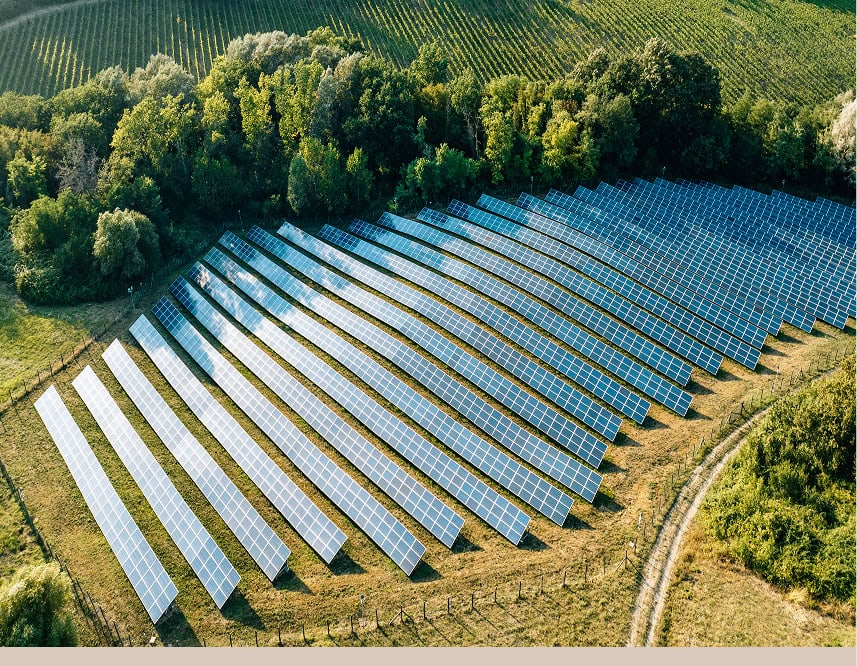
At Boni Holding we rely on ourselves for everything. That is why we produce our own electricity from photovoltaic installations. In this way, we reduce greenhouse gas emissions from the company's activities, as well as electricity consumption from the national distribution network. We use the generated electricity for our own needs - directly at the meat processing plant or pig farm, where the photovoltaic installations are located. But not everywhere - at Boni Farm Shumen, as well as at Boni Farm Nikola Kozlevo, we sell part of the electricity produced. The total installed capacity of all photovoltaic systems amounts to 16.2 MWp.
Another measure we are taking to reduce energy consumption and, accordingly, greenhouse gas emissions, is the modernization of equipment in pig farms and meat processing plants. Much of our equipment is energy efficient and uses less electricity than standard machines and appliances used in the industry. For example, automated ventilation systems with modular control and inverter electric motors have been installed within the pig farms. Adaptive control ensures an optimal microclimate in the livestock premises and, respectively, lower electricity consumption compared to conventional ventilation systems.
Also, the trucks we use to transport our products meet the latest EURO standards.
Although they do not exceed the permitted standards, we are making efforts to further reduce the level of ammonia emissions. In our pig farms, we mainly apply the following measures: